Introducing Chunks and Whole Pieces
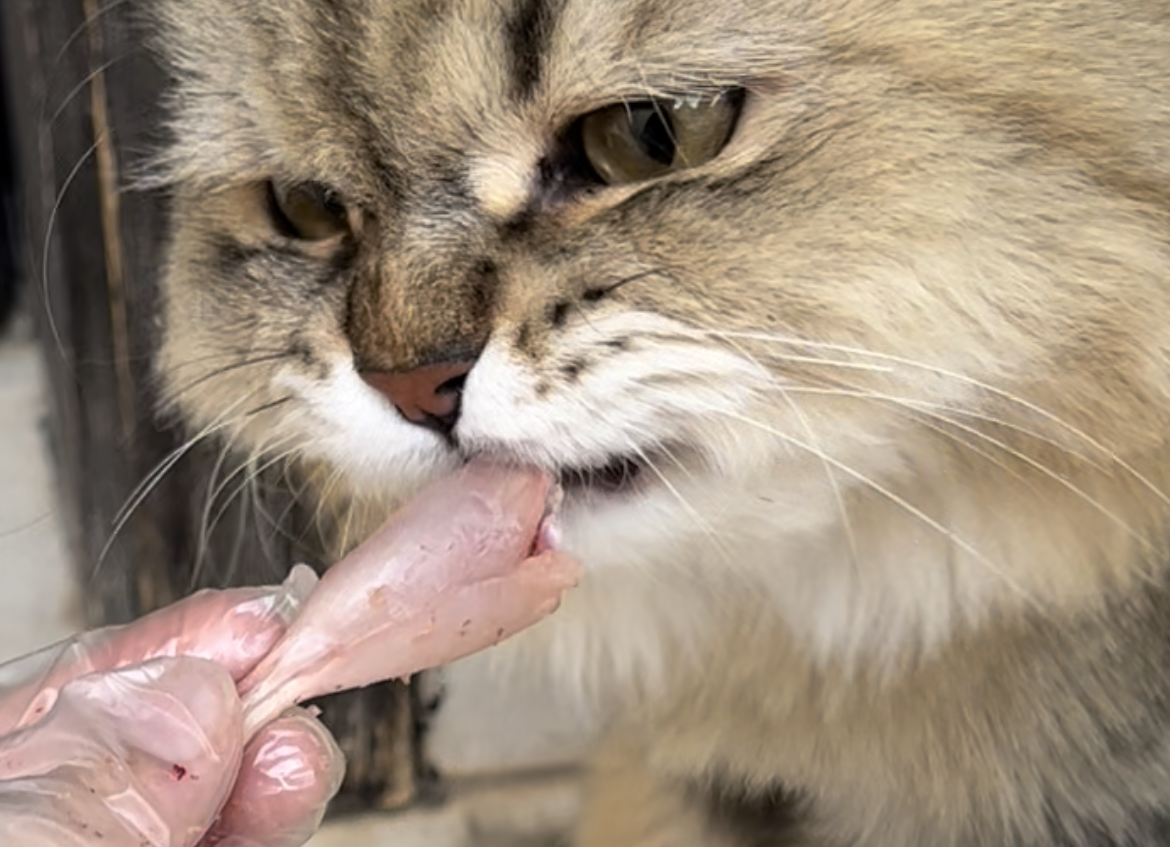
Chewing is a natural and important behavior for cats. Once your cat is comfortable eating raw food, you can begin introducing larger pieces of meat.
Starting with Chunks
If your cat has only eaten minced food:
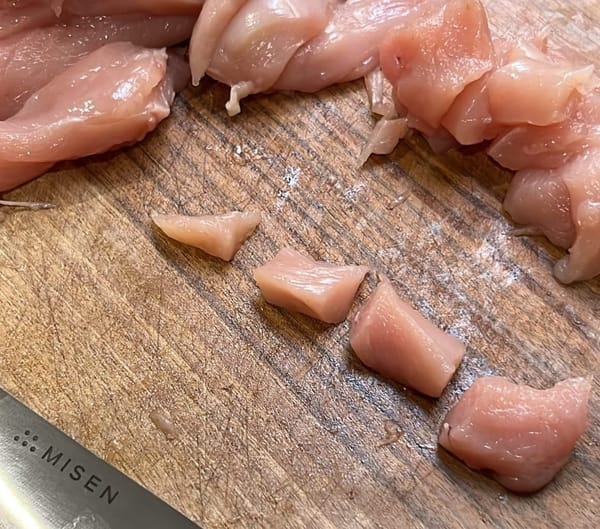
· Introduce small chunks of chicken breast.
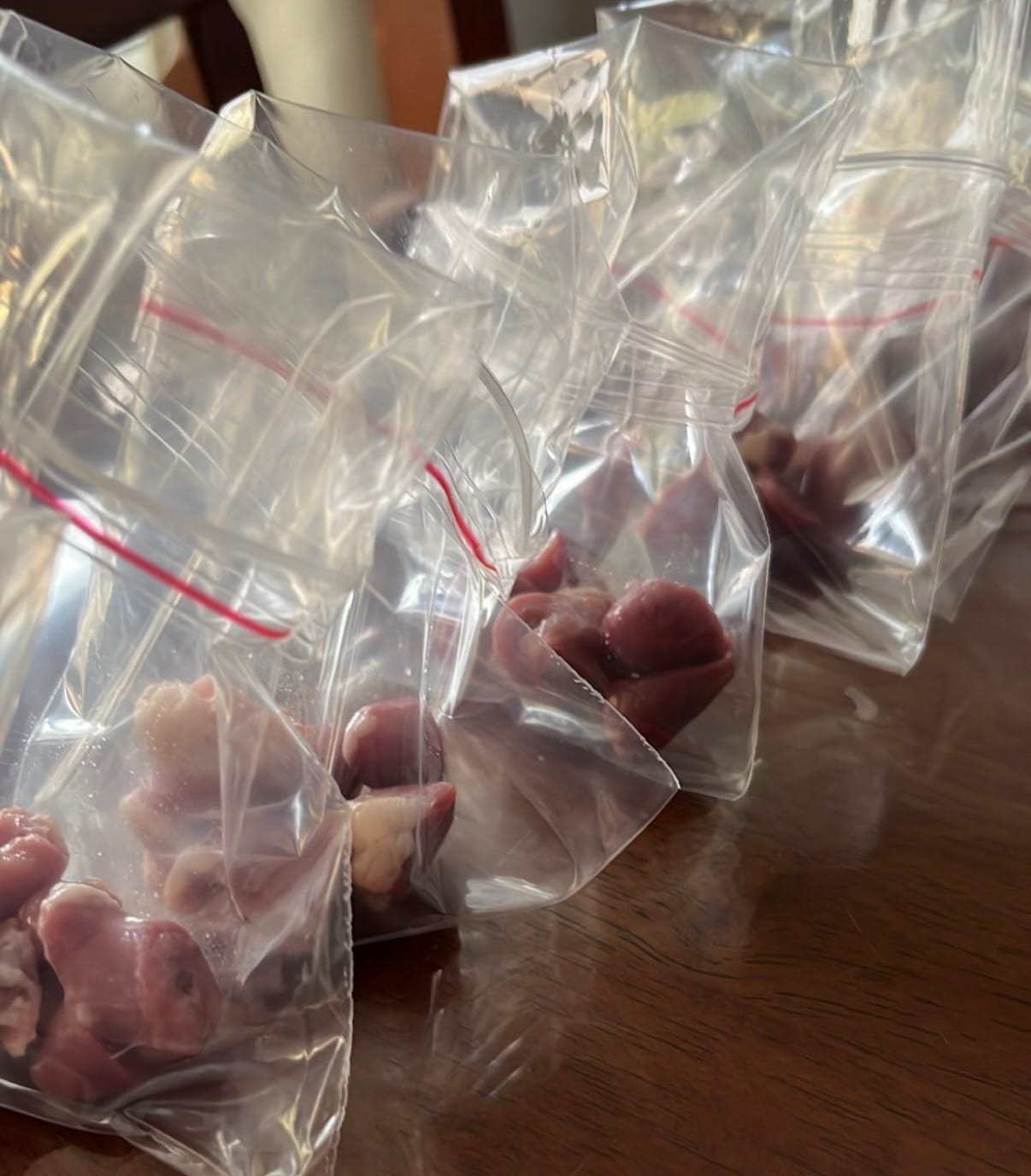
· Introduce small pieces of chicken heart (cats can have up to 3 hearts per day)
· Add small, evenly distributed pieces of liver.
The chunks should be included as part of the meal's total weight rather than added on top of an already balanced recipe.
Important
Do not simply add extra hearts, liver, or meat to an existing recipe. This can unbalance the nutritional composition of the meal.
Instead, adjust the recipe during preparation.
Increasing Chunk Size
· Start with small pieces of boneless meat.
· Supervise your cat during meals.
· Gradually increase chunk size as your cat becomes more confident chewing.
Many cats eventually enjoy larger chunks because chewing satisfies natural hunting instincts.
Introducing Raw Bones
Once your cat is experienced with chunked meals, you may consider introducing edible raw bones.
Start with:
· Quail bones
· Small poultry bones
· Soft, edible bones from appropriately sized prey
Introduce bones slowly and always supervise.
Important Safety Warning
Never feed cooked bones.
Cooked bones become brittle and can splinter into sharp fragments. These fragments can cause life-threatening complications
Only feed raw edible bones appropriate for your cat's size and chewing ability.
Transitioning from Eggshell Powder to Bones
Eggshell powder is often preferred for cats with kidney disease because it contains significantly less phosphorus than bone.
If your cat has been cleared of any urinary issues:
· Begin with approximately 50% eggshell powder and 50% bone.
· Maintain this ratio for several months.
· Slowly increase the percentage of bone over time.
A gradual transition helps your cat adapt safely.